
Is It Better to Repair or Replace a Garage Door?
For Arlington homeowners asking “is it better to repair or replace a garage door,” keep unsafe doors still: repairs from $69 suit isolated faults; replacement suits widespread damage. Call for 24/7 service and a free on-site estimate.
Need help now? (571) 747-1469
Is It Better to Repair or Replace a Garage Door With Localized Damage?
Repair makes sense when the fault is confined to a replaceable part and the rest of the door remains sound. A worn roller, damaged bottom seal or faulty opener does not automatically justify removing the door. The decision depends on what failed and whether the remaining parts can work safely together.
Replacement deserves a closer comparison when damage affects several sections, their connections or the door’s ability to travel correctly. The important distinction is between replacing a failed component and repeatedly repairing a door with broader problems. Several symptoms can also come from one fault, so noise, uneven movement and reversal do not automatically mean three separate repairs.
Use our guide to common garage door repairs to understand individual faults. Here, the goal is to decide whether fixing the identified fault leaves you with a sound door.
Which Garage Door Conditions Change the Repair Decision?
- One damaged panel — A single damaged section creates a panel replacement question before it creates a whole-door replacement question. The assessment must include the section’s edges, hinges and connection to neighboring panels.
- Damage across several sections — Multiple bent, split or deteriorated sections expand the scope beyond one replacement part. Compare the complete section repair with a replacement door, including the supporting hardware each option needs.
- A door that sits crooked — A crooked door needs professional assessment before further operation. Its position alone does not establish whether the door needs replacement; the cause and any resulting damage determine the scope.
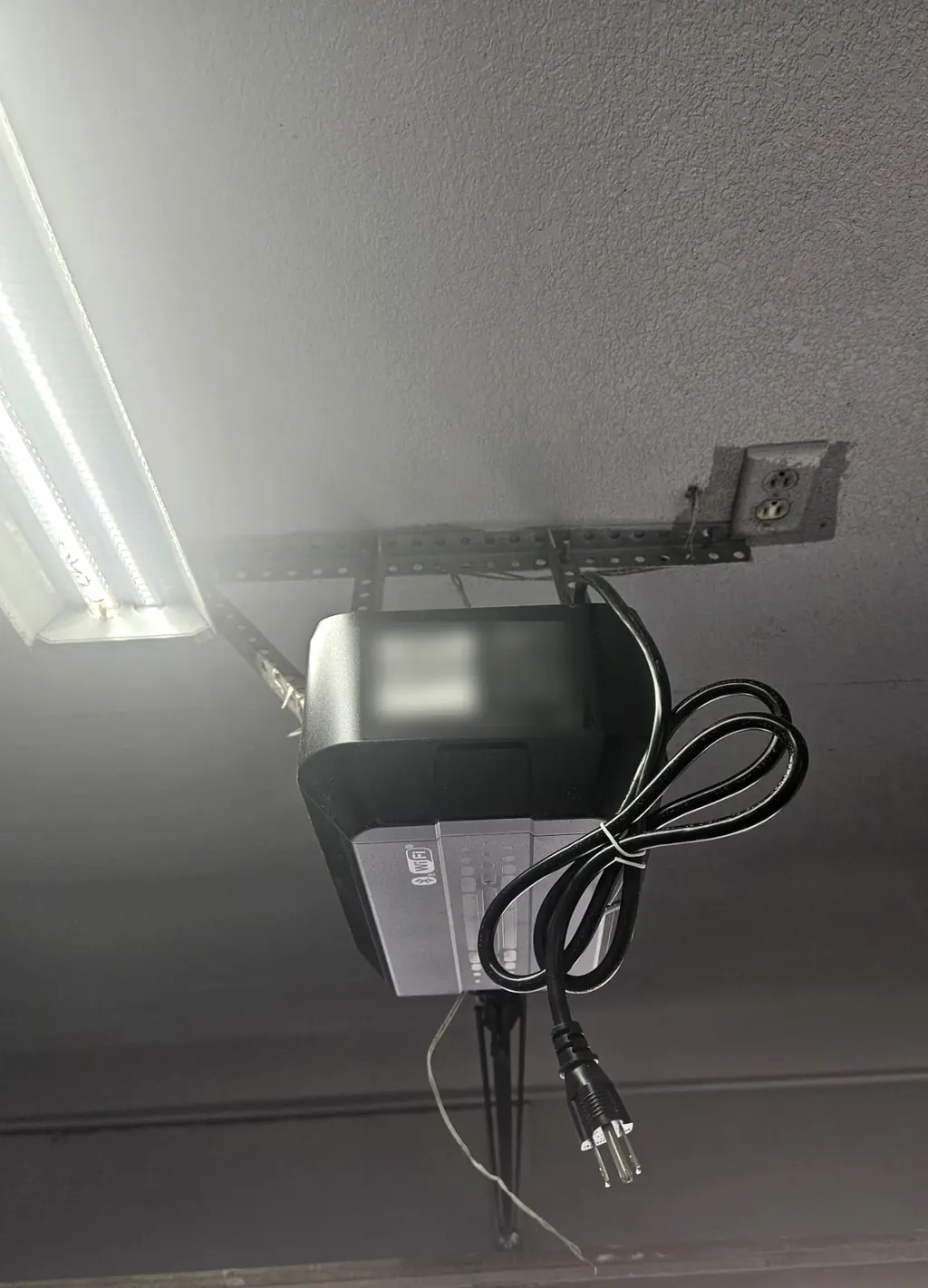
- A problem confined to the opener — An opener fault and a damaged door are different repair decisions. Separate the opener diagnosis from the condition of the panels, tracks and lifting components before approving a complete replacement.
- The same failure keeps returning — Repeated work on the same symptom calls for a review of the underlying cause. Previous invoices help distinguish an unresolved fault from unrelated wear in different parts.
How Can You Compare Garage Door Repair and Replacement Safely?
- Stop operating a visibly damaged door — Stop pressing the remote or wall control if the door is crooked, hanging unevenly or partly out of its tracks. Check that everyone stays clear; do not move underneath it to inspect the damage.
- Record the door’s current position — From a safe location, note whether the door is closed, partly open or fully open. Check that your notes describe its resting position without moving it or pulling the emergency release.
- Photograph the visible panel damage — Use your phone camera from floor level to record dents, cracks and gaps between sections. Review the photographs for both the affected panel and its neighboring sections; do not climb a ladder or stand beneath the door.
- Look at exposed hardware without touching it — Use a flashlight from a safe position to observe visible hinges, rollers and tracks. Note anything displaced or visibly damaged, then check that your record separates observations from a diagnosis; leave springs, cables and brackets untouched.
- Note what the opener was doing — Record whether the opener made a sound, showed an indicator light or stopped during the last attempted operation. Check your notes against what you actually observed; do not run another cycle just to reproduce a fault.
- Gather the door’s repair records — Collect previous invoices and any existing door or opener paperwork. Check whether earlier work addressed the same component, a different component or a recurring symptom.
- Request separate written scopes — Ask for a repair estimate and, when the damage warrants it, a replacement estimate. Check that each identifies the affected parts, labor and any existing equipment intended for reuse.
- Compare the finished result — Read each estimate as a description of the door you will have afterward. Check which damaged or worn parts remain, which are replaced and whether a separate opener problem still needs attention.
Need help now? (571) 747-1469
What Does Each Garage Door Repair or Replacement Option Address?
Repair an individual component
This option addresses an identified fault such as a damaged roller, cable, track or bottom seal. It fits a door whose remaining structure and components are suitable for continued use. The estimate should identify the failed part and any related damage instead of grouping everything under a general repair label.
Replace a damaged panel
Panel replacement preserves the rest of the door when a suitable replacement section and sound adjoining sections make that approach practical. Fit, section connections and appearance all matter. A panel that looks similar is not enough to establish that it belongs in the existing door.
Replace the complete door
A complete replacement addresses the door as an assembly when repairing individual sections leaves too much damage or deterioration behind. Compare exactly which panels, tracks and hardware the installation includes. Do not assume an estimate for a new door also includes a new opener.
Repair or replace the opener separately
The opener moves the door, but it does not correct damaged panels or lifting components. Assess the door and opener separately so replacing one does not leave the original problem in the other. Any retained opener needs to be suitable for the replacement door.
Which Costs Belong in a Garage Door Repair Versus Replacement Estimate?
Compare the total written scope, not a single advertised starting price. Panel replacement starts at $180, while opener repair starts at $45. Those services address different parts, so neither figure represents a complete solution until the fault and related damage are assessed.
A useful repair estimate identifies every component included in the work. A replacement estimate should identify the door, installation labor, supporting hardware and any separate opener work. Ask whether removal and disposal of the existing door are included before comparing totals.
Keep labor visible in both estimates so you can compare equivalent work. Our article on garage door repair labor costs covers that part of the calculation. There is no single percentage of replacement cost that settles every decision; the condition left after the repair matters too.
Which Garage Door Problems Mean You Should Stop Using It?
Stop operating a door that hangs unevenly, has left its tracks or has visibly loose lifting cables. Keep people and vehicles away from its path. Do not force the door, pull its emergency release or try to hold it open.
Springs, cables and their attachment points are not owner adjustment tasks. Removing a bracket or attempting to straighten loaded hardware can release stored force. Arrange residential garage door repair when these parts are damaged or the door cannot move safely.
For a manufacturer’s safety reference, see the Clopay garage door safety checklist. Follow the instructions for your own door and opener; do not perform an operating test on a visibly damaged assembly.
Need help now? (571) 747-1469
What Should a Garage Door Estimate Resolve Before You Approve It?
The estimate should connect the observed problem to the proposed work. For example, replacing a visibly damaged panel does not resolve a separate track problem unless that work is included. Ask which findings support repair and which findings support replacement.
For panel work, establish whether a suitable section is available and how its appearance compares with the existing sections. For full replacement, establish which existing components will remain. These details prevent a lower initial estimate from hiding a different scope.
Age belongs in the assessment alongside condition, repair history and parts availability. A birthday alone does not establish that a door needs replacement. Likewise, replacing one failed part does not establish that every remaining component is sound.
What Should You Check After Garage Door Repair or Replacement?
Ask the technician to demonstrate the completed door from a safe viewing position. Watch for even travel, proper closing and contact between the bottom seal and the floor. Report scraping, visible binding or an uneven resting position before accepting the work.
Have the technician demonstrate the opener’s safety features according to its manufacturer’s instructions. Do not use your body to test reversal. If the opener remains from the previous installation, include its operation in the final demonstration.
Compare the invoice with the approved estimate and keep both with your door records. Confirm that the listed replacement parts match the completed work and that you receive any applicable operating and maintenance instructions. These records make a future repair decision more concrete.
Frequently asked questions
Does a noisy garage door need to be replaced?
Noise alone does not establish that the whole door needs replacement. The assessment should identify whether the sound comes from a roller, hinge, track, opener or another component. Stop using the door if the noise accompanies crooked travel or visibly displaced hardware.
Should I replace the opener when I replace the garage door?
A new door does not automatically require a new opener. Have the existing opener assessed for condition and suitability for the replacement door. The written estimate should state whether it will be retained, repaired or replaced.
Can replacing one damaged panel avoid replacing the whole door?
Yes, when a suitable replacement section fits the existing door and the remaining sections and supporting components are sound. Damage around the hinges and adjoining sections also needs assessment. Compare the panel replacement scope with a complete door replacement before approving either.
How much does garage door repair cost compared with replacement?
Our garage door repair starts at $69; door replacement starts at $650, plus labor from $25. These are starting prices for different scopes of work. Compare written estimates that identify the parts, installation work and any separate opener work included.
Get a Garage Door Repair or Replacement Estimate
Call (571) 747-1469 to arrange an on-site assessment of your door’s damage and repair scope.