
What Are the Best Garage Door Rollers?
The best garage door rollers for most homes are correctly sized nylon rollers with ball bearings; inspect them only with the door closed. If a roller has left its track, stop operating the door and call (571) 747-1469.
Need help now? (571) 747-1469
The Best Garage Door Rollers Match Your Door and Daily Use
Nylon rollers with ball bearings: a strong choice for home garages
A nylon wheel generally produces less rolling noise against a metal track than a steel wheel. Choose a model whose dimensions and load rating meet the door manufacturer’s requirements, especially when the garage connects directly to living space.
Steel rollers: useful when the door specification calls for them
Steel rollers are available in designs suited to demanding use, but the material alone does not establish their capacity. For a heavy or frequently operated door, compare the manufacturer’s load and cycle ratings before selecting a replacement.
Basic plastic rollers: check the bearing design
Some basic plastic rollers turn without ball bearings. Before replacing them with another basic set, compare the bearing construction and documented service life of compatible alternatives.
Sealed bearings: compare maintenance requirements
Sealed bearings limit contamination at the bearing assembly and may require no added bearing lubrication. Check the product instructions: a sealed bearing and an exposed bearing can require different care even when both rollers have nylon wheels.
Garage Door Roller Size Matters More Than the Package Label
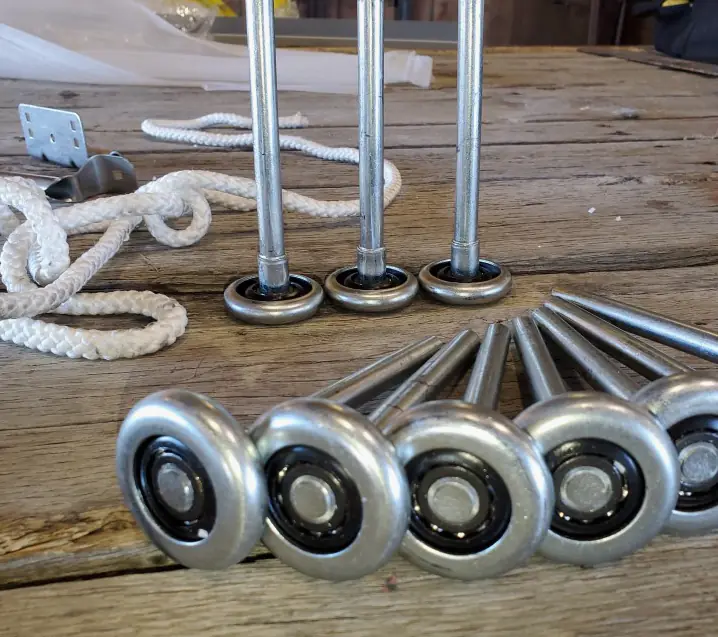
Match the roller’s wheel diameter, wheel width, stem diameter, and stem length to the door hardware. A roller that looks close can still bind, sit incorrectly in a hinge, or fail to travel properly through the track curve.
Nominal roller sizes are product categories, so use the manufacturer’s actual dimensions when comparing parts. Photograph an accessible roller and the door’s identification label with the door closed; leave measurements that require removal to a technician.
Check the replacement’s stated load rating and any cycle rating against the intended application. A larger bearing count alone does not prove that a roller supports your door or will outlast another design.
Check Garage Door Roller Condition Without Removing Hardware
- Confirm the door is fully closed — Begin only with the door resting fully on the floor. If it is hanging unevenly, stuck open, or partly outside its tracks, leave it alone and arrange professional repair.
- Prevent accidental opener operation — Keep remotes away from other users and disconnect opener power using its accessible plug or designated breaker. Confirm that no one will operate the wall control during your inspection; do not pull the emergency release to start this check.
- Read the door identification label — Use a phone camera to capture an accessible manufacturer and model label. Check that the photo is readable so you can locate the correct door instructions without removing a roller.
- Look at accessible roller wheels — From floor level, use a flashlight to inspect visible wheels for cracks, missing pieces, or an uneven surface. Check each accessible wheel separately; leave hidden or high components for the technician.
- Look for displaced wheels or bent stems — Observe where each visible wheel sits inside its track without touching it. A wheel outside the channel, a visibly bent stem, or a loose-looking bracket means the door needs repair before further operation.
- Inspect the surrounding track — Look for crushed sections, loose-looking fasteners, or heavy debris near the rollers. Check whether the damage sits beside a worn wheel, but do not bend the track or loosen its brackets.
- Record the symptoms you already noticed — Write down whether the earlier problem was scraping, rattling, jerking, or stopping at one point. Note where it happened; do not run a damaged door again just to reproduce the sound.
- Decide whether operation can resume — If you found damaged wheels, displaced hardware, or track damage, keep opener power disconnected and arrange repair. If the visual check found no damage but the door still has unexplained operating symptoms, have it inspected before another test cycle.
Need help now? (571) 747-1469
These Garage Door Roller Defects Call for Replacement
- Cracked or chipped wheel surfaces — Missing material changes the surface that rolls against the track. Lubricant cannot restore a broken wheel, so replacing the affected roller addresses the damaged part.
- A wheel that slides instead of turning — A seized bearing can make the wheel drag along the track during operation. If you previously noticed this behavior, stop using the door until the roller and surrounding track are checked.
- Excessive play at the wheel — A wheel that visibly tilts around its bearing may have internal wear. A technician can assess the play with the door secured; do not reach into the track to test it yourself.
- A bent or heavily corroded stem — Stem damage can interfere with the roller’s movement through its supporting hardware. The inspection should also cover the hinge or bracket holding that stem, because a new wheel alone will not correct damaged support hardware.
New Garage Door Rollers Will Not Correct Every Scrape or Jolt
Rollers guide the door through its tracks; they do not supply the lifting force. Replacing them will not correct a broken spring, a damaged cable, or an opener fault.
Scraping at the same point on every trip can involve a track obstruction or alignment problem. Rattling can also come from hinges or other loose hardware, so sound alone does not identify the failed part.
When the opener runs but the door does not move correctly, the problem needs an inspection of both systems. Our guide to how a faulty garage door opener is repaired covers the opener side of that diagnosis.
Garage Door Roller Care Depends on the Wheel and Bearing Design
Read the roller instructions before applying lubricant. Where lubrication is specified, use the recommended product and application point; do not assume the nylon wheel surface needs coating.
Keep track running surfaces clean rather than packing them with grease. Grease can collect dirt, and it cannot compensate for a damaged wheel, worn bearing, or bent track.
Use the Clopay garage door safety checklist as a reference for routine door safety checks. Follow your own door manufacturer’s instructions for maintenance and leave adjustments involving springs or tensioned cables to a garage door technician.
Need help now? (571) 747-1469
Garage Door Roller Replacement Can Involve Tensioned Hardware
Some roller positions involve brackets connected to the lifting cables. Removing that hardware can release stored force, so an owner-level inspection stops before loosening brackets, hinges, cables, or track sections.
Call a garage door repair technician when a roller leaves its track, the door sits crooked, or a wheel or stem shows damage. We provide garage door roller replacement service for worn or damaged rollers.
The scope depends on whether wear affects one roller, several rollers, or adjacent hardware. See our guide to garage door roller replacement costs for pricing details without confusing a roller replacement with a separate track repair.
A Completed Garage Door Roller Repair Needs a Travel Check
After replacement, the technician should check that the rollers stay seated throughout the door’s travel and pass through the track curves without binding. The door should move without a new scrape, sudden jolt, or wheel dragging along the track.
The inspection should also address door balance and the opener’s safety functions according to the applicable manufacturer instructions. A door that still struggles after roller replacement needs further diagnosis before normal use.
Keep the replacement part information and maintenance instructions with your door records. Those details identify the installed roller design and prevent incompatible parts or maintenance products from being used later.
Frequently asked questions
Should I replace every garage door roller at the same time?
A single damaged roller does not automatically require a complete set. When several rollers show similar wear, replacing the set can address deterioration across the door; an isolated failure also calls for checking the nearby track and supporting hardware.
Are more ball bearings always better in a garage door roller?
Bearing count alone is not a reliable way to choose a roller. Compare the documented capacity, dimensions, bearing protection, and maintenance requirements for products that fit your door.
Can I mix nylon and steel garage door rollers?
Material alone does not determine compatibility, but each installed roller must meet the requirements for its position on the door. Avoid mixing parts based only on appearance; have the existing hardware and replacement specifications checked together.
How often should garage door rollers be replaced?
Follow the roller manufacturer’s inspection and replacement guidance rather than using one interval for every door. Daily use, exposure, and bearing design affect wear, while visible damage or faulty movement calls for inspection regardless of the roller’s age.
Have Worn Garage Door Rollers Checked
Call (571) 747-1469 for roller replacement at your home or business.